
This is part of a series of essays reflecting on my writing and my dark fantasy setting, called OROBORO.
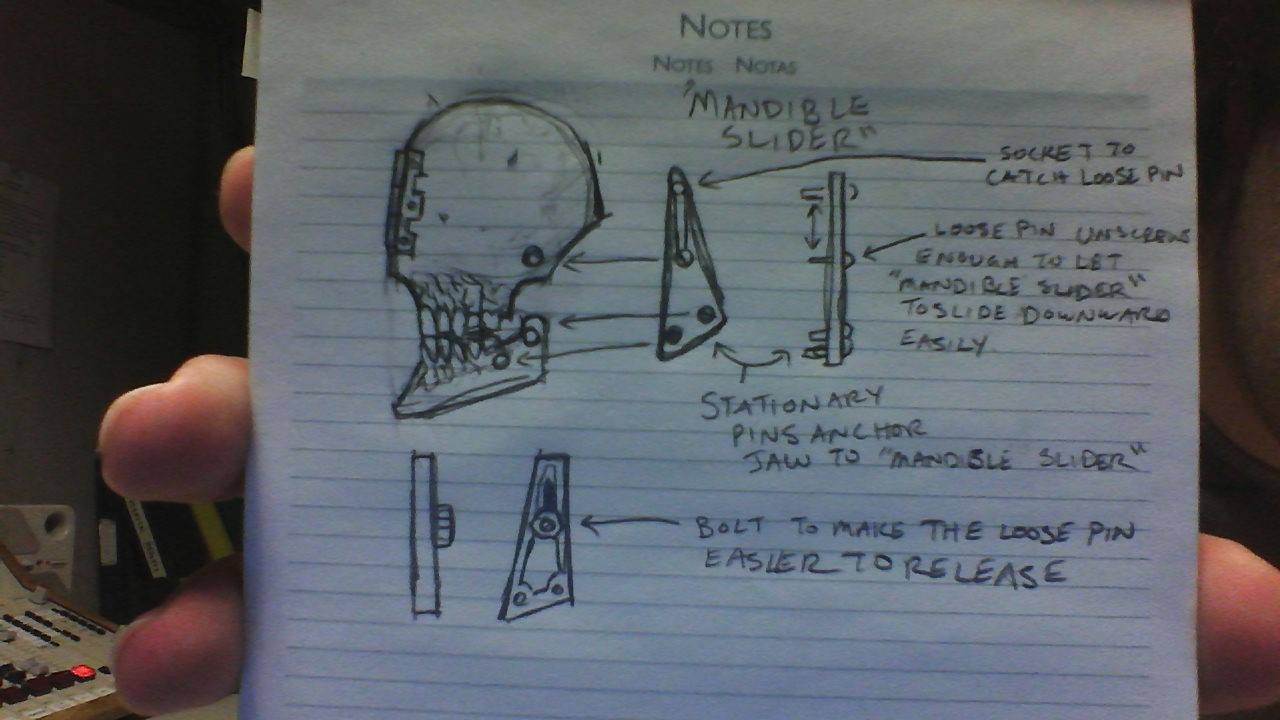
Some of the earliest stories I set in the world of OROBORO were about a character called No-Eyes, who was a conman and necromancer. I imagined him as a kind of Cenobite astronaut—his head would be encased in a steel helmet that would allow him to preserve and remove his head while he puppeted the rest of his mummified body.
He wasn’t a necromancer because he raised the dead—he was a necromancer because he had mastered death.

In my world, obtaining immortality is the highest attainment a person can aspire to; no matter what form it takes, it entails transcending the limits of humanity. To achieve it, you need a profound insight into nature, humanity, and the cosmos—essentially, a kind of enlightenment (you can read more about that here).
But mystical or esoteric traditions are full of examples of the “wise” trying to keep the uninitiated or unworthy from gaining hidden knowledge, usually because they will misunderstand or misuse it. So I asked myself: “What if someone learned that hidden knowledge, but they shouldn’t have?”
That became the foundation for No-Eyes’ character.
In my mind, No-Eyes had embraced the kind of self-annihilation that’s described in the Buddhist concept of nirvana, granting him insight into eternity and infinity, but some shred of egotism survived the scouring, tainting his enlightenment.

The resulting character was meant to be a husk—a mask worn by something unspeakable. His speech, mannerisms, and outward personality were vivid and distinct, but ultimately a performance. Although he spoke and acted human, the operations of his mind were supposed to be foreign to anyone but himself, and this allowed him to do disgusting, awful things.
No-Eyes was not meant to be a cruel, emotionless automaton, but rather a self-actualized predator, one that operated on another plane of thought.
Crafting No-Eyes
When crafting No-Eyes’ character, I drew inspiration from the Qliphoth, the inversion of the Kabbalah’s Tree of Life, to represent his twisted form of ‘enlightenment’.

I read books about serial killers, cult leaders, and criminal sadists like Ted Bundy, Charles Manson, and the Marquis de Sade to get a better grasp on how a person could prey on other people.
For No-Eyes’ personality, I drew upon the classic hallmarks of a psychopath: a mask of glib charm to hide his lack of empathy, a capacity for deception and manipulation, and a profound narcissism.
As I imagined his perspective, I thought that he would likely be familiar with prisons and have a special relationship with them. Eventually, I came across this quote from Charles Manson:
“The mind is endless. You put me in a dark solitary cell, and to you that’s the end, to me it’s the beginning, it’s the universe in there, there’s a world in there, and I’m free.”

The quote captured No-Eyes’ transcendental mode of thought as well as his narcissism. It also hinted at the cracks in his perception: when you’re convinced you’re the apex of creation, you refuse to see beyond yourself.
After reading Helter Skelter and other Manson literature, I didn’t think Charles Manson was some singular, mad philosopher—his supposed insights were stolen from a mish-mash of countercultural sources (including Scientology) and twisted to his own purposes.
From my reading, Manson’s two main strategies as a cult leader were 1) to invert people’s perceptions of themselves and the world, and 2) strip away other people’s individuality and will and replace them with his own.
I think these techniques are summed up in another one of his quotes:
“Look down at me and you see a fool,
Look up at me and you see a god,
Look straight at me and you see yourself.”
When crafting No-Eyes as a character, I thought that the ability to invert people and situations would be the cornerstone of what made him terrifying and devious.
Workshopping No-Eyes
When I brought No-Eyes’ first short story to a writing workshop, I had been so immersed in the most depraved, twisted, violent material I could find that I felt like it was leaking out of my pores. I mentally prepared myself for the other writers’ discomfort and distaste. I reassured myself that upsetting, uncomfortable stories still deserved to be read, and that no matter how many disgusted side-eyes I received, the story had something important to say.
But when I sat down in my chair for the workshop, I was greeted by smiles.
Everyone loved No-Eyes.

They admired his charisma and sympathized with his grievances. When they saw his elaborate plans unfold, they praised his cleverness. And when he murdered someone with his bare hands, they said he was justified.
The next No-Eyes short story I brought to the workshop, the same pattern played out: the character would coldly manipulate others, betray their trust, murder them, and get away with his crimes. The readers in the workshop defended him, sympathized with him, and praised him.
When crafting No-Eyes, I had immersed myself in horrors because I believed that by facing them, understanding them, we gain a deeper insight into the full scope of the human condition. I expected readers to be interested, even captivated, by following No-Eyes’ narratives, but I expected that captivation to be tempered by wariness and dread, born from the realization that they were inhabiting the mind of someone duplicitous and amoral.
So I was surprised and a little unnerved by the passionate reaction to the character. But then I realized No-Eyes was doing exactly what I crafted him to do: deceive, seduce, and invert.

Years later, No-Eyes appeared in Black Heaven, the Lab’s visual novel project, as the central antagonist. The player character, Uzo, wakes up and finds No-Eyes arm-deep in his chest cavity, stealing his organs.
No-Eyes offers Uzo a deal: live his life over again in exchange for bringing No-Eyes the souls of Uzo’s friends, so No-Eyes can consume them. When Uzo asks whether his friends will be in pain when No-Eyes eats their souls, No-Eyes says they will, and explains it like this:
“When your soul is unraveling, your mind is spinning dreams to reassure you you’re all right. But it keeps making nightmares instead.”
“And to the person concerned, those nightmares seem to go on forever.“
To me, this was one of those moments that irreversibly sours a character in the eyes of a reader: No-Eyes was admitting that he was condemning these innocent souls for an eternity of suffering.
Nevertheless, when the Kickstarter for Black Heaven ended, the top question from backers was whether they could romance No-Eyes.

Leave a Reply