
Immortality is a recurring thing in the fantasy genre—liches, elves, gods, and so on. I wanted to write down some of my thoughts on immortality, both in terms of fiction and more generally. It’s a fascinating topic, because it naturally intersects with so many other things—mathematics, metaphysics, and the limits of the human body and mind, to name just a few.
More than that, I’ve discovered that talking about immortality often unearths hidden connections between seemingly disparate topics, such as cartography, swordsmanship, and chemistry. All of these topics end up becoming different ways to talk about the human condition and its relationship to the infinite and the absolute.

A couple people have asked me if I would want to live forever. I tell them no—the concept is terrifying to me. It’s not because I’m afraid of becoming a blind, immobile husk floating in a vat of chemicals, or losing my soul when my consciousness is digitally uploaded like Dixie Flatline, though those are both good reasons.
The main reason eternal life terrifies me is because I am not perfect.
In my mind, immortality, eternity, infinity, and perfection are all overlapping topics. To be immortal is to be eternal and infinite, and to be truly unending means being perfect.
A disclaimer before I go too deep down this rabbit hole: I think esoteric and occult ideas are great material for fantasy, but I don’t believe in them.
The Paradox of Perfection
We’re going to be talking a lot about absolutes—things and concepts that are complete, total, and without flaws. It seems weird and abstract at first, because people don’t deal with absolutes in their day to day life. No one has absolute power over others, or absolute certainty that something is going to happen, but we can still try to imagine absolutes.
For example, Plato imagined an eternal, unchanging realm that contained things that were “absolute”, like an absolutely round sphere or an absolutely flat plane. He also imagined this realm would contain more abstract things, like absolute beauty.
However, when we try to bring the absolute into reality, things always seem to go wrong.
Take quantum computers, which seek to operate at a temperature as close to absolute zero as possible. At absolute zero, atoms are perfectly motionless. But achieving absolute zero is physically impossible—removing all heat from something would require infinite energy. And so quantum computers strive to get as close as possible…but they can never operate at absolute zero.

Perfection is another absolute. And likewise, the closer one gets to achieving it, the more insurmountable the challenges become, whether it be a perfectly efficient machine or a perfectly round sphere.
But even if someone were to create something perfect, another problem arises: how do we know it’s perfect? How do we measure perfection? Unless we have perfect tools, all we have are approximations.
Here’s a mind-bender: how much does a kilogram weigh? If the kilogram is your basic unit of weight, how do you define a kilogram? Until 2019, it was defined by a specific physical object–a little platinum cylinder kept in a vault in Paris. The Avogadro Project set out to create a new physical reference for what exactly one kilogram was by (coincidentally) making a perfectly round sphere.

Despite years of work, their sphere is still not perfect—if it were enlarged to the size of the Earth, its tallest variance in topography would be about 7 feet above sea level. Pretty amazing, but not perfect.
The only place we seem to find perfection is in the world of mathematics, where exact angles, unending lines, and absolutely flat planes are used to arrive at perfect answers. These answers are then mapped onto our world, but that mapping is never exact, either—Zeno’s Paradox and the shortcomings of weather models are evidence of that.
To me, making perfection a reality seems to evoke the mathematical concept of the asymptote—”a line that continually approaches a given curve but does not meet it.” One can approach perfection, but the closer one gets, the deeper the gulf between ideal and real becomes.
But if perfection is unattainable, then it would seem that so is the infinite and the eternal. How could something transcend entropy, decay, and death if it wasn’t perfect? How can one craft something perfect using imperfect tools, or make something perfect out of imperfect materials?
It seems like a paradox.
But we’ve been talking about perfecting things—spheres, machines, so on. What about perfecting a person? What would a perfect person look like, and how could you attain that perfection? This question lies at the heart of immortality in my fiction.
But the same paradox applies in my stories, just as it does in reality: how to make something perfect out of imperfect materials?
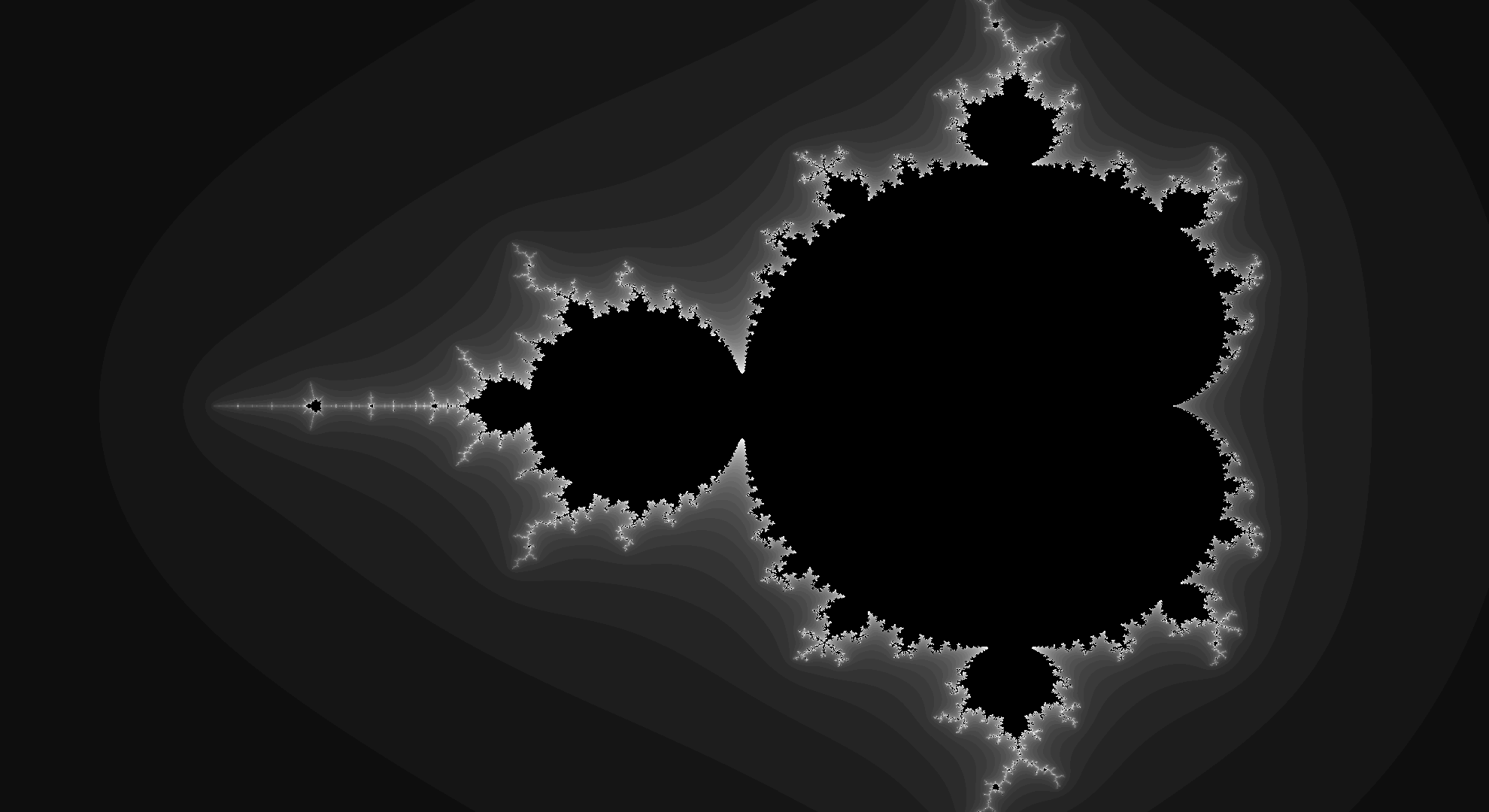
To me, paradoxes don’t represent dead ends, but rather an opportunity for transcendence. To understand what I mean, I want to talk about fractals next.
Leave a Reply