
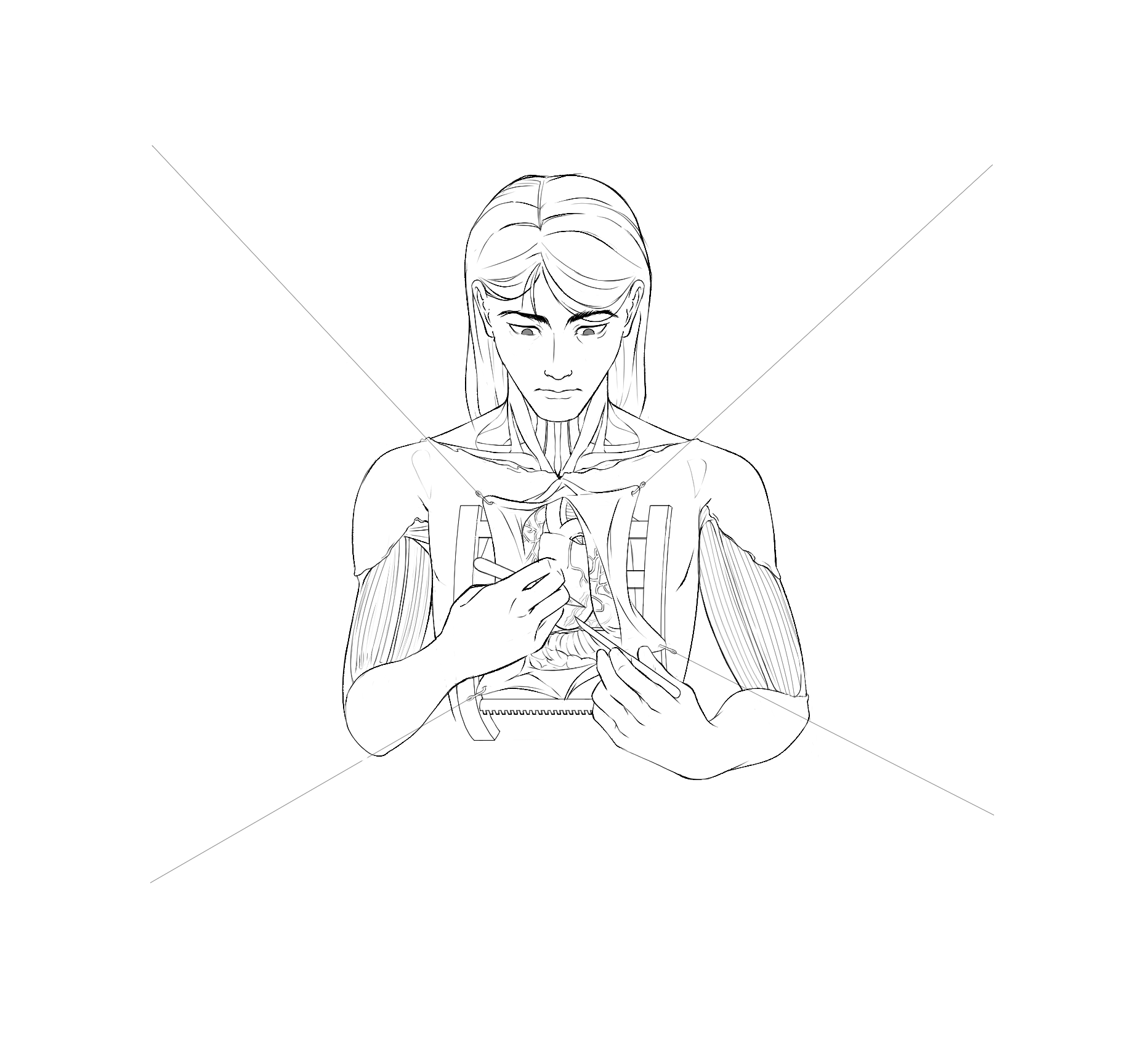
This is part of a series of posts exploring the worldbuilding of my dark fantasy setting, OROBORO.
Physiomancy, also known as flesh-stitching or sculpting, is widespread within the setting of OROBORO, both as a means to enhance the workings of the body and as a form of fashion. Although it overlaps with medicine, the art of physiomancy aims primarily to alter or transcend the workings and limits of the body, with many practitioners focused on attaining immortality.
Various styles of physiomancy have developed, each with different goals and aesthetics. The four primary styles are outlined below.

Flayed Style
Flayed Style removes portions of the skin to expose the underlying muscles or even organs. Often accompanied with decorations embedded in flesh and bone, this style is linked to the practice of regularly replacing one’s skin and muscle with grafts.
According to ancient traditions, being able to strip out old, disease-ridden, or cancerous parts of the body reflects a mastery of the body, while more recent fashions treat the skin as another layer of clothing and the underlying flesh as the ‘true’ self, which is only revealed to close friends.

Shell Style
Shell Style removes portions (or all) of the skin and replaces it with artificial plates made of lacquered wood, porcelain, metal, or other materials. These plates are usually highly decorated and may incorporate the wearer’s family crest or house emblem.
Shell Style was originally developed as a form of armor for warriors and duelists, but soon became adopted by artists and aristocrats who wished to turn themselves into living works of art. Wearing a piece of another’s ‘shell’ (such as a finger or shoulder joint) is considered a sign of an intimate relationship.

Protean Style
Protean Style is a more radical form of body modification that grew out of immortality schools’ search for the perfect human form. Each of these bodies is usually a bespoke creation and may take years of painful and delicate physiomantic surgery to craft.
Protean Style is intimately tied to the flesh-work of the jozu, also known as elves, who abandoned their ties to humanity and crafted new bodies that were long-lived, fragile, and unable to bear children.

Homunculus Style
Homunculus Style is considered the most extreme form of body modification and involves unmooring a person’s soul from their body of flesh and blood and binding it to a wholly artificial body called a homunculus.
Most homunculi are etched with intricate enchantments that allow them to walk, speak, and even dance, but older ones are immobile vessels for their user’s soul. Although a homunculus may grant a person immortality, the process of binding oneself to inert matter has the potential to drive the soul mad.
Want to read a story about physiomancy and immortality?

Read “Old No-Eyes” on the Occult Triangle Lab or on Kindle.
Summary:
The foundations of the illustrious Grand Schools of immortality have been shaken by the appearance of a small black book—the Nokizi. Its mysterious author, Old No-Eyes, not only claims that the Schools are built upon lies, but that the true path to immortality lies in escaping time itself.
However, the only scholar capable of deciphering the Nokizi’s encoded instructions may be Yute, a disgraced mage who was expelled from the Grand Schools due to the scheming of his rival, Tenza.
After Tenza arranges a meeting with Yute to beg for his help in unraveling the Nokizi’s secrets, Yute’s revenge takes horrifying shape…
Leave a Reply