
A long time ago, I came across this quote from Terry Pratchett:
“If you are going to write, say, fantasy – stop reading fantasy. You’ve already read too much. Read other things; read westerns, read history, read anything that seems interesting, because if you only read fantasy and then you start to write fantasy, all you’re going to do is recycle the same old stuff and move it around a bit.”
Since then, I’ve read everything from The Golden Bough to Godel, Escher, Bach. I’ve found inspiration in films, TV shows, visual art, and even video games, so here’s a list of six works that had a major influence on my fantasy worldbuilding.
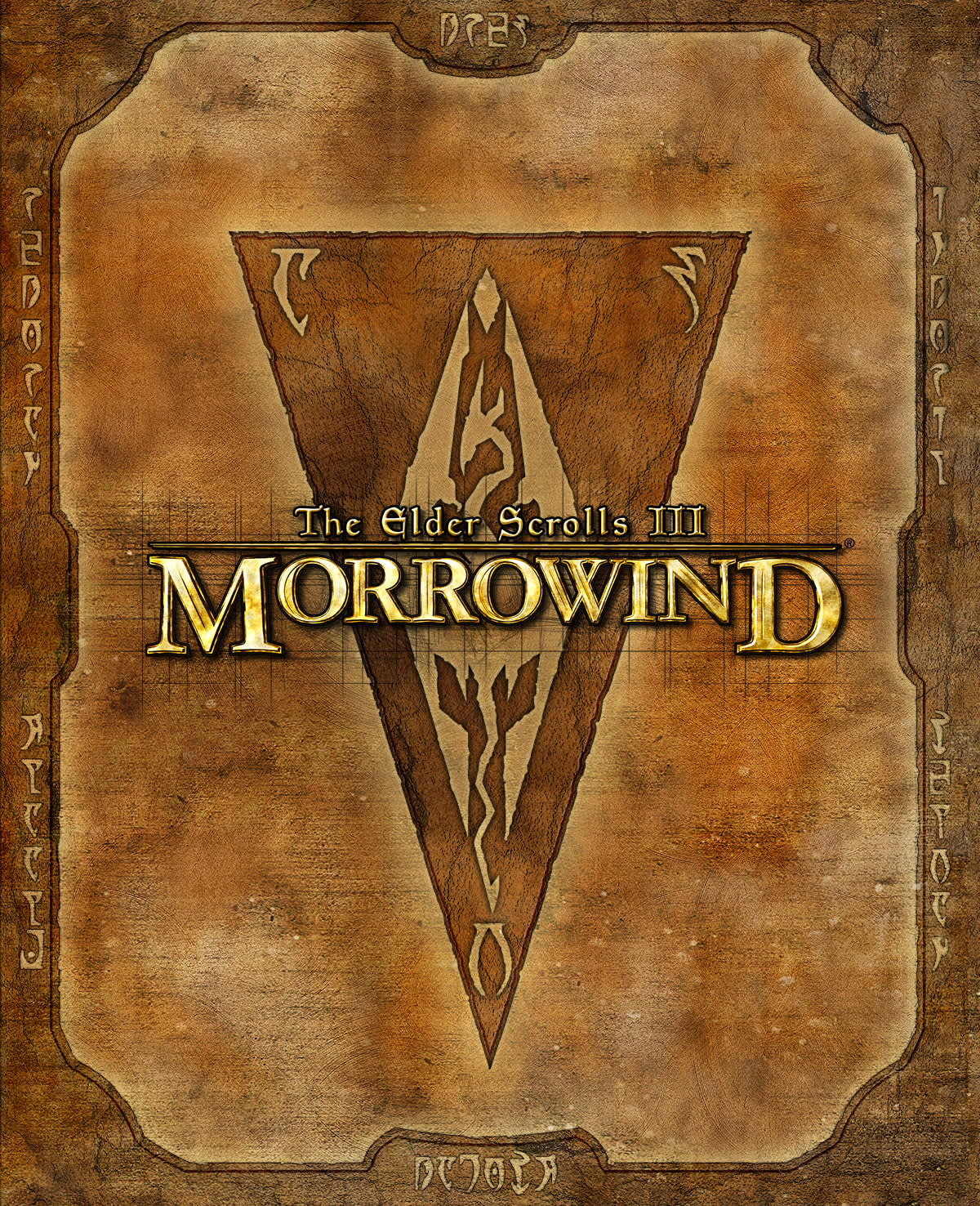
1. The Elder Scrolls III: Morrowind

By the standards of today’s open-world roleplaying games, Morrowind (2002) is a janky piece of junk, but I think its worldbuilding achieves a level of verisimilitude that every fantasy world should aspire to. As many other fans have said, the continent of Vvardenfell feels genuinely alien, with its jellyfish-like fauna and giant wizard towers grown from mushrooms, but it’s all grounded in the history and culture of the Dunmer. Its main storyline is complex and nuanced, casting the player as a messiah mercilessly hunted by their own church because of the threat they represent to the established order.
How It Influences My Work: I keep coming back to Morrowind to study how to make a living, breathing fantasy world—how geography shapes regional character, how economics warps politics and traditions, and how the tensions of a multi-cultural society are manifested at the micro and macro level, just to name a few things. I wrote a whole article about it (now hosted with broken images by Fantasy-Faction).
2. Neuromancer by William Gibson

I re-read this book every couple years, and I’m always quoting it. In my mind, Neuromancer is the standard for verisimilitude in speculative fiction, as well as the poster child for how to not only conceive of fascinating, mind-expanding premises for fiction, but write it in a compelling, concise way. I strive to render my stories in such vivid, visceral prose, but God knows that journey is going to continue forever.
How It Influences My Work: When I was getting my Creative Writing degree, my professor emphasized the necessity of “concrete detail”: a combination of specificity and elements that you can see, smell, feel, and hear. All of these details make the story more immersive, more visceral, and Neuromancer is filled with concrete detail, making its world feel not just real, but lived-in. Every time I find myself trying to focus on a scene in my mind’s eye, I find myself comparing the mental resolution to Gibson’s razor-sharp descriptions.
3. Neon Genesis Evangelion (GAINAX)

Neon Genesis Evangelion is a mecha anime that transforms from a monster-of-the-week action show into an apocalyptic, psychological drama centered on the damaged psyches of its cast. It moves seamlessly back and forth between hard sci-fi and body horror, all while draped in obscure German philosophy and occult overtones. 30 years of pop culture patina have not dulled the rawness, the honesty, and the horror of Evangelion.
How It Influences My Work: To me, Evangelion beautifully illustrates the way human lives and sorrows can intersect and amplify one another, how the gulf between self and Other is both essential and painful, and why, in the face of all cruelty, fear, and cynicism, there is hope that human beings can love and understand one another. These are some of the central ideas of my fiction and world, and I return to Evangelion to remind myself how to explore them.

4. Princess Mononoke (Studio Ghibli)
Princess Mononoke is one of the few pieces of media that captures the reverence, wonder, and terror of folklore and legends. Apart from the beautiful animation, my favorite part of the movie is Ashitaka, whose heroism doesn’t come from his ability to overcome obstacles with violence, but instead from his empathy, patience, and self-sacrifice. Both the human and beast characters are portrayed as driven by fear, ignorance, and a desire to protect their own. These drives morph into hatred, and it’s hatred that is the true enemy.
How It Influences My Work: Princess Mononoke depicts a world where humans have reached a profound tipping point: their growing mastery of firearms and industry allows them to dominate nature and upset the metaphysical balance of all things. This idea, that humans can reshape the fundamental nature of the world in their own, flawed image, is a cornerstone of my worldbuilding.
5. Necronomicon by H.R. Giger

Fusing transhumanism, occultism, and Symbolism, Giger’s body of work constitutes a genuine form of worldbuilding with its own language of recurring symbols, architecture, and characters. In spite of (or maybe because of) its disturbing nature, there’s something enamoring about the intricate, mechanistic precision of Giger’s work—it seems genuinely alien, like a relic from another time or planet, and yet it comes from one person’s mind. It makes me wonder what other monstrous or fantastical worlds lurk inside all of us.
How It Influences My Work: Giger’s warping of the human form inspired my world’s physiomancy and pursuit of immortality, which demands a kind of transhumanism, a warped transcendence. Giger’s vision of a post-apocalyptic humanity adapting itself to live in a corrupted world also influenced the history of my world. Most of all, Giger’s vision of a nightmarish world that nevertheless possesses its own beauty shaped my view of a flawed, but still beautiful world.
6. Bloodborne (FromSoftware)

FromSoftware is (in)famous for building maddeningly intricate worlds and generation-spanning narratives whose key details are carefully hidden in the nooks and crannies of an unrelentingly hostile game. Bloodborne is no exception, but what starts as a bleak, blood-soaked story about monster-hunters becoming monsters gradually transforms into a cosmic horror tale about humanity attempting to join the ranks of mysterious, Lovecraftian gods whose blood seems to hold the promise of apotheosis.
How It Influences My Work: Bloodborne’s city of Yharnam is obsessed with the ritual imbibing of blood, which not only heals illnesses, but intoxicates the consumer. This society-wide obsession with blood provided a template for my world’s obsession with immortality and how surgeons and scholars would rise in power and prestige. The academy of Byrgenwerth and its horrific, transhumanist experiments also inspired the immortality schools of my world.
Leave a Reply